






It, Misery, The Shining, Pet Semetary—on the backs of novels like these, Stephen King hoisted himself on the pop culture landscape in a way few—if any—other horror authors have managed. The so-called “Master of Horror” is a household well known for bringing the scares and his penchant for doorstop sized tomes.
While horror has largely comprised the meat of King’s expansive bibliography, it’s easy to forget or overlook how often he’s veered from that particular darkly lit path. The latter years of his career have seen King venturing outside his supposed comfort zone with some mysteries, a bit of crime fiction, and even a slice-of-life novella. But this is hardly an aberration. If you take a close look at King’s works—particularly his short story collections, a place where he’s often his most experimental—he’s actually spent a good portion of his career stepping outside the boundaries of modern horror. Interestingly, his most typical landing spot has been sci-fi and fantasy.
These science-fiction and fantasy titles are undeniably Stephen King, and they also show a side of the author that is all too often disregarded or mischaracterized simply because King’s name is on the dust jacket. If horror is not your particular cup of tea yet you still find yourself wondering what all the fuss is about, this is actually a good area to dig in—all the King and very few, if any, of the scares.
The Dark Tower Cycle
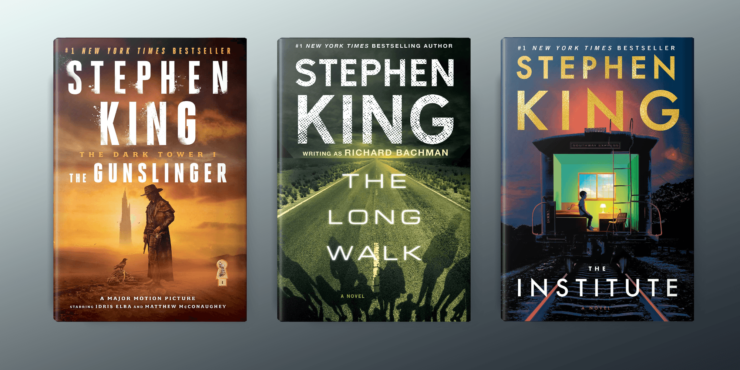
Given that he is best known for his horror, it’s all the more interesting that the true centerpiece of Stephen King’s narrative universe—the spine from which nearly all of his stories hang—is a seven volume western-tinged fantasy owing as much to Arthurian legend and Tolkien as it does to Lovecraft and Matheson. Widely considered his magnum opus, The Dark Tower is the key work in Stephen King’s sci-fi/fantasy canon. Beginning with The Gunslinger and ending with The Dark Tower, the series centers on Roland Deschain, a member of a fallen knight-like order known as gunslingers, in a dystopian world parallel to our own with similarities to the American old west. Driven by an all-encompassing obsession with the mythical Dark Tower—the nexus of the multiverse—Roland sets out on the trail of a deadly wizard known as the Man in Black. The Man in Black not only destroyed Roland’s life, but could lead him to the tower. It is a sweeping saga that combines elements of King’s trademark horror with epic fantasy, features some of his best characters, and in a deeper sense is metaphorical examination of King’s views on storytelling.
Buy the Book
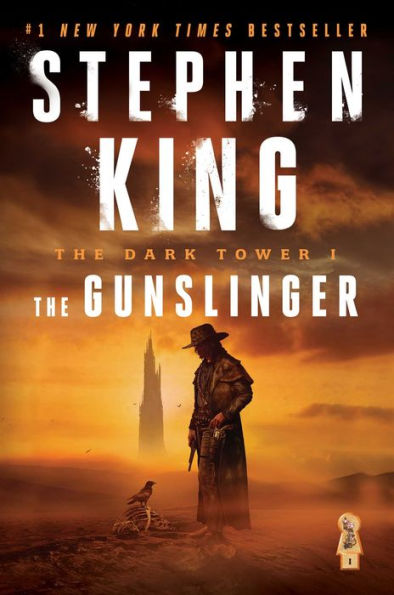
The Dark Tower 1: The Gunslinger
The Stand
While a solid argument can be made that Stephen King really hit his stride with ‘Salem’s Lot and The Shining, when most people think Stephen King, they think of The Stand. While it’s easy to think of this 1,000 page doorstop as simply a horror, let’s be honest, the actual scares are few and far between. The meat of The Stand is two-fold: 1) you have post-apocalyptic trappings set against the backdrop of plague-ravaged world, and 2) the fantastical struggle between good and evil at its center. While it may be King’s best known novel, The Stand sits fairly firmly on the sci-fi and fantasy end of the post-apocalyptic spectrum. The Stand follows an eclectic group of survivors spread across two factions—one good, one evil—in the aftermath of a catastrophic pandemic that wipes out most of the world’s population. As the two factions struggle to rebuild their differing views of society, they are drawn inexorably drawn toward a climactic confrontation.
Buy the Book
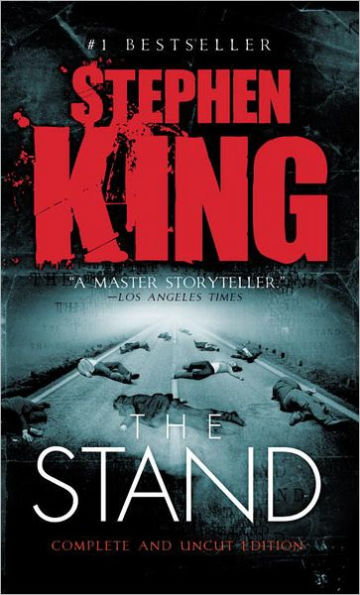
The Stand
The Long Walk (as Richard Bachman)
The Long Walk was the second of Stephen King’s so-called Bachman Books—the infamous first, Rage, was taken out of print at King’s request due to its potential influence on school shooters. Set against the backdrop of a near-future, dystopian America, The Long Walk follows a teenager named Ray Garraty who joins a grueling event simply called the Walk for a chance at a potentially life-winning prize.
Buy the Book
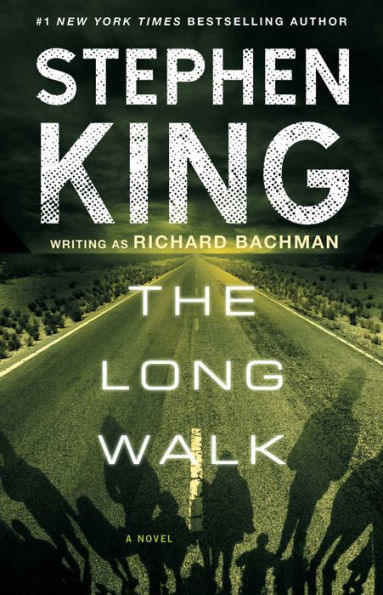
The Long Walk
Firestarter
I recently reread Firestarter for the first time since high school and couldn’t help but wonder how this one was ever considered horror. The novel centers around a young girl named Charlie who inherits pyrokinetic abilities from her parents, who themselves gained telekinetic and telepathic abilities after being experimented on by a shady government outfit known as the Shop. When the Shop learns of Charlie’s abilities, they unsuccessfully attempt to kidnap her and kill her mother in the process. Firestarter opens with Charlie and her father on the run from the organization and staying just barely a step ahead. Unfortunately, the walls are beginning to close in. There’s nothing paranormal or supernatural at play—just the classic sci-fi staple of science gone awry.
Buy the Book
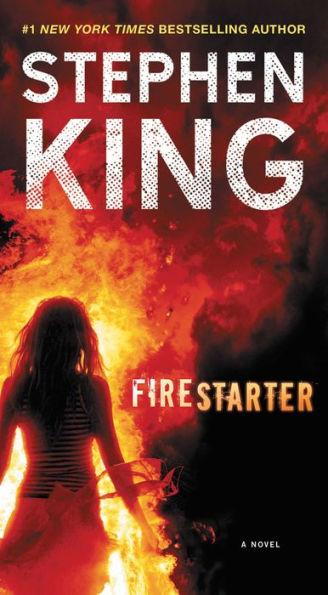
Firestarter
The Talisman (with Peter Straub)
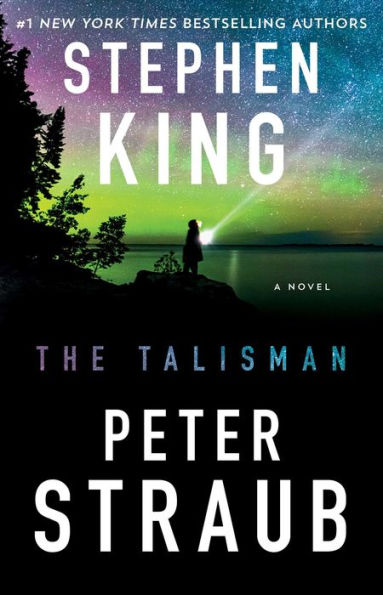
The Talisman, written with fellow horror icon Peter Straub, is pure dark fantasy and like The Gunslinger before it, is one of King’s early forays into the concept of parallel fantasy worlds. In this case, a young boy named Jack Sawyer must make his way simultaneously across the US and a twisted parallel world known as the Territories, where time and distance work differently, to locate a mysterious talisman and save his mother. While in some ways, the Territories mirror our own world, it is more akin to a dark mythic world populated by werewolves, grotesque mutants, and fairytale queens. Truthfully, it’s not the best from either writer, but for a more fantastical introduction to Stephen King, it certainly fits the bill.
Buy the Book
The Talisman
Black House (with Peter Straub)
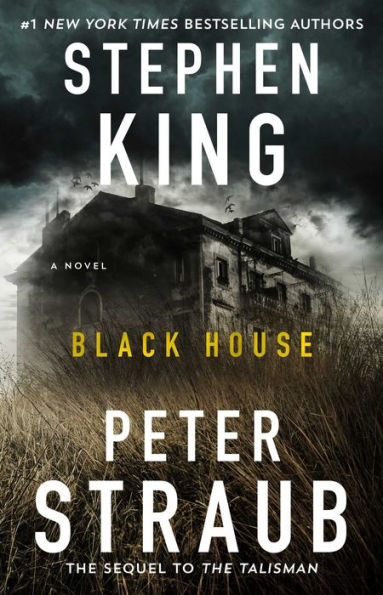
While like The Stand, Black House skews more toward horror than anything on this list, it’s one you’ll want to take a look at it after picking up The Talisman. This slice of dark fantasy is somewhat more grounded, but continues the story of Jack Sawyer, now a celebrated detective with the LAPD and no memory of his childhood exploits in the territories. Here, a series of grisly murders in a sleepy Wisconsin town inevitably draws Jack back into the Territories, the twisted and potentially deadly realm from his childhood.
Buy the Book
Black House
The Eyes of the Dragon
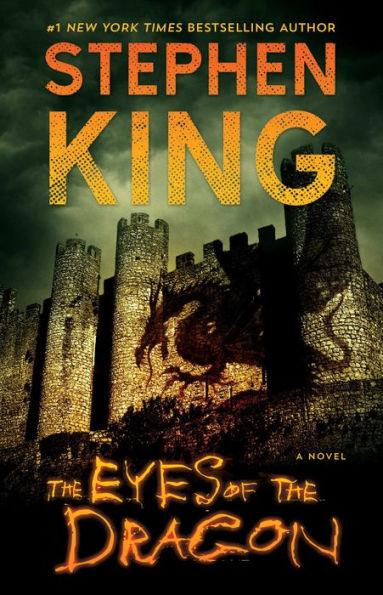
Other than The Dark Tower cycle, The Eyes of the Dragon is unquestionably King’s most traditional foray into fantasy. The Eyes of the Dragon arrived near the end of Stephen King’s real boom period and just before the lean years that followed The Tommyknockers. As such, this epic fantasy of two princes staving off the devious machinations of a court magician was not particularly well-received by King fans at the time. It more or less entirely eschews the horror aspects that he was so well known for to chart a course into traditional fantasy tropes, from the reluctant hero to the devious court magician and the pseudo-medieval European setting. King doesn’t exactly reinvent the wheel in any sense here, but he does ensure that the wheel rolls along quite well. Given that it was conceived as a bedtime story for his children, its clear that The Eyes of the Dragon was a labor of love and, when viewed through that prism, has its charms. It skews more Young Adult than anything else in the King canon as well, but it is a well-hewn, if predictable adventure that shows fantasy is indeed in King’s wheelhouse.
Buy the Book
The Eyes of the Dragon
11/22/63
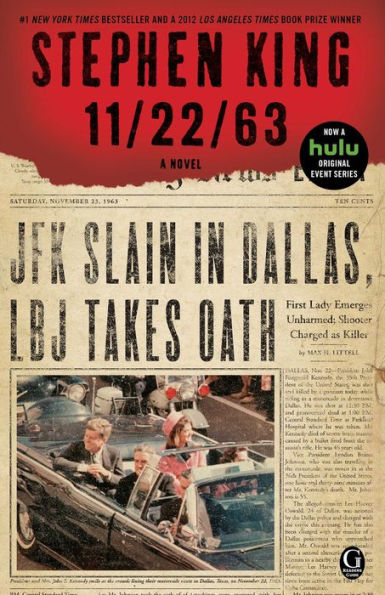
Stephen King’s time travel/alternative history epic features some of the best writing he’s ever done. It’s a well conceived, bittersweet rumination on unintended consequences, nostalgia, and how moments of cultural significance ripple outward. As is often the case with King, he takes his time getting from point a to b, but the journey here is a particularly satisfying one as we venture along with English teacher Jake Epping, for better or worse, into one of the defining moments of the 20th century.
Buy the Book
11/22/63
The Institute
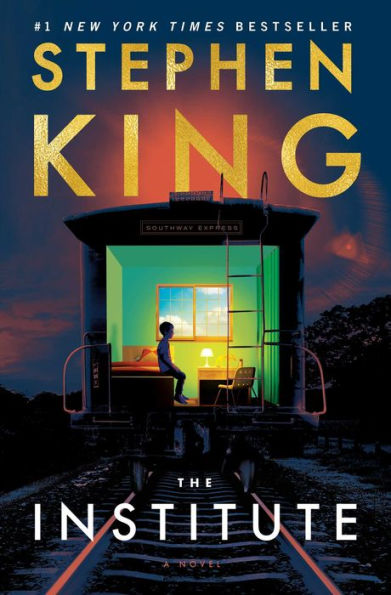
Stephen King’s latest is a dose of pure sci-fi. In many ways, it reads like a spiritual successor to Firestarter. The two do cover a fair amount of the same narrative territory—kids with psychic abilities, shadowy government organizations, the often-monstrous nature of humanity under the guise of the greater good. I also can’t help but wonder whether the titular Institute is, itself, an off-shoot of the Shop? Regardless, this tale of kidnapped children and telekinesis is an intriguing sci-fi thriller that raises some big questions—which it admittedly doesn’t really answer—and makes for an entertaining read.
Buy the Book
The Institute
Originally published in March 2020.
Keith is a freelance writer residing in Philadelphia with his lovely, if oft exasperated wife, son and three cats. When not writing about books and movies, Keith tries to be optimistic about humanity—he usually fails. He generally has opinions, sometimes he shares them on Twitter @keith_rice1.

I’ve read some Stephen King but he’s not one of my go to authors . I’m not really into scary. I’ve read The Talisman which I liked better than the Black house and I can’t remember why. I’ve only read each of them once. Middle school was a long time ago. King uses the Shop in several stories. I thought the Institute was an of shoot as soon as I saw the cover and title. I read Firestarter after I watched the movie. It’s definitely not horror. That’s why even though I’ve never read the bottom three books you mentioned I’ll probably read the Institute at some point and Eyes of the Dragon. I should at some point go back and re-read the Dark Tower now that he’s finished the saga. I read the first two or three when they originally came out and never went back and finished it once the rest finally were published. It was to long in between and I’d of had to start over.
Would The Dead Zone not fit here as well? There’s no explanation for where Johnny’s gift comes from, but there are no horror elements. Actually, when I think about it, King’s probably written more stories that aren’t horror than those that are.
Some of King’s shorts play with scifi like The Jaunt, Beachworld & I am the Doorway.
Isn’t King a genre in his own right? Not sure you can really make any other distinction – ie, I wouldn’t classify him primarily as a horror writer. At least, not anymore. Probably not since the Eighties, tbh. You could argue that he’s known for certain seminal works – e.g. Pet Semetary & The Shining – and that’s these works define him as an author, but I only started reading King around fifteen years ago and actually came to his more popular works after reading a lot of his other stuff. Contrary to received wisdom, I actually don’t think the books I’ve mentioned are King at his best. It is one of the scariest books I’ve ever read for sure (and it was clearly King’s intention to scare) so I guess there’s always that.
I’m kinda surprised Firestarter and The Institute made this list, but not Carrie.
He has a long history of, mostly, kids with psychic powers in his fiction.
Joyland is still one of my favorite books by Stephen King, a coming of age story with a mystery backdrop.
@5: Firestarter asks the questions “What do you do if you have psychic powers but are just a kid?” and “What do you do when pursued by powerful forces?” Carrie focuses on answers: “Kill everybody messily.” and “There are no more-powerful forces.” I’ll grant that there’s a spectrum rather than a sharp dividing line, and where people place stories on a spectrum varies — a friend insisted that Powers’s Last Call was horror — but ISTM that Carrie is much more about the splatter and Firestarter about the problem.
@2: That was also my first question when I got to the end of the list; The Dead Zone is another what-do-I-do-about-this-and-how story, not a build toward terror.
This list is greatly appreciated, as I have been reluctant to try Stephen King even though I know he is a good writer, because horror is not my thing. (Although I have read T. Kingfisher’s horror, because I will read anything she writes.) Having some idea where to start with a list as long as King’s is very helpful!
@7: The “kill everyone messily” part might be how it ends up, but I don’t remember it being the main focus of the book. *shrug* It’s been awhile since I read it.
From what I’ve read so far of The Institute (probably 85-90%), it’s striking me as more straight horror than this list is giving it credit for.
As a long-time Stephen King fan, I’m a little bit surprised about this list.
Is is absolutely true that Stephen King has written plenty of fiction that isn’t horror but there would have been much be better examples to choose from than The Talisman, The Institute or even The Long Walk.
In fact, I think this list could do a disservice to people who aren’t that much into horror but want to give King a shot. They may feel tricked, which would be a shame.
There is The Green Mile which, although it is set in a prison with prisoners on death row, it is a positive tale. Even better is the novella Rita Hayworth and Shawshank Redemption, one of King’s best novellas out there if you ask me.
There’s Dolores Claiborne, The Girl Who Loved Tom Gordon, The Colorado Kid, Tommyknockers, Joyland, to name just a few of his books that have little to no horror in them.
(I haven’t caught up to his most recent works because I treat King’s books like candy. I know I will love them so I enjoy them little by little, always keeping some in reserve for when I need a great book to get me out of a reading slump.
But from what I’ve heard, some of these are also devoid of horror.)
I love The Talisman (though there are parts of it that remind me too much of The Gunslinger, or the other way around), but did not enjoy Black House as much. Particularly because some of Jack’s backstory in Black House sort of renders The Talisman irrelevant (I won’t go into it because of course spoilers).